Apulia, the “heel” of Italy, is a region with an extraordinary historical, cultural and natural heritage: it boasts coastlines on both the Adriatic and the Ionian Seas, millenary villages, plains and national parks, as well as a cuisine based on locally sourced excellence. Its six provinces (including Bari, Barletta‑Andria‑Trani, Brindisi, Foggia, Lecce and Taranto) offer experiences ranging from diving in crystalline waters to exploring Baroque historic centres, up to excursions in the Murgia and the Gargano.
Bari:
Bari rises on the Adriatic coast and for centuries has been a crossroads
between East and West, as well as the economic and cultural capital of Apulia. 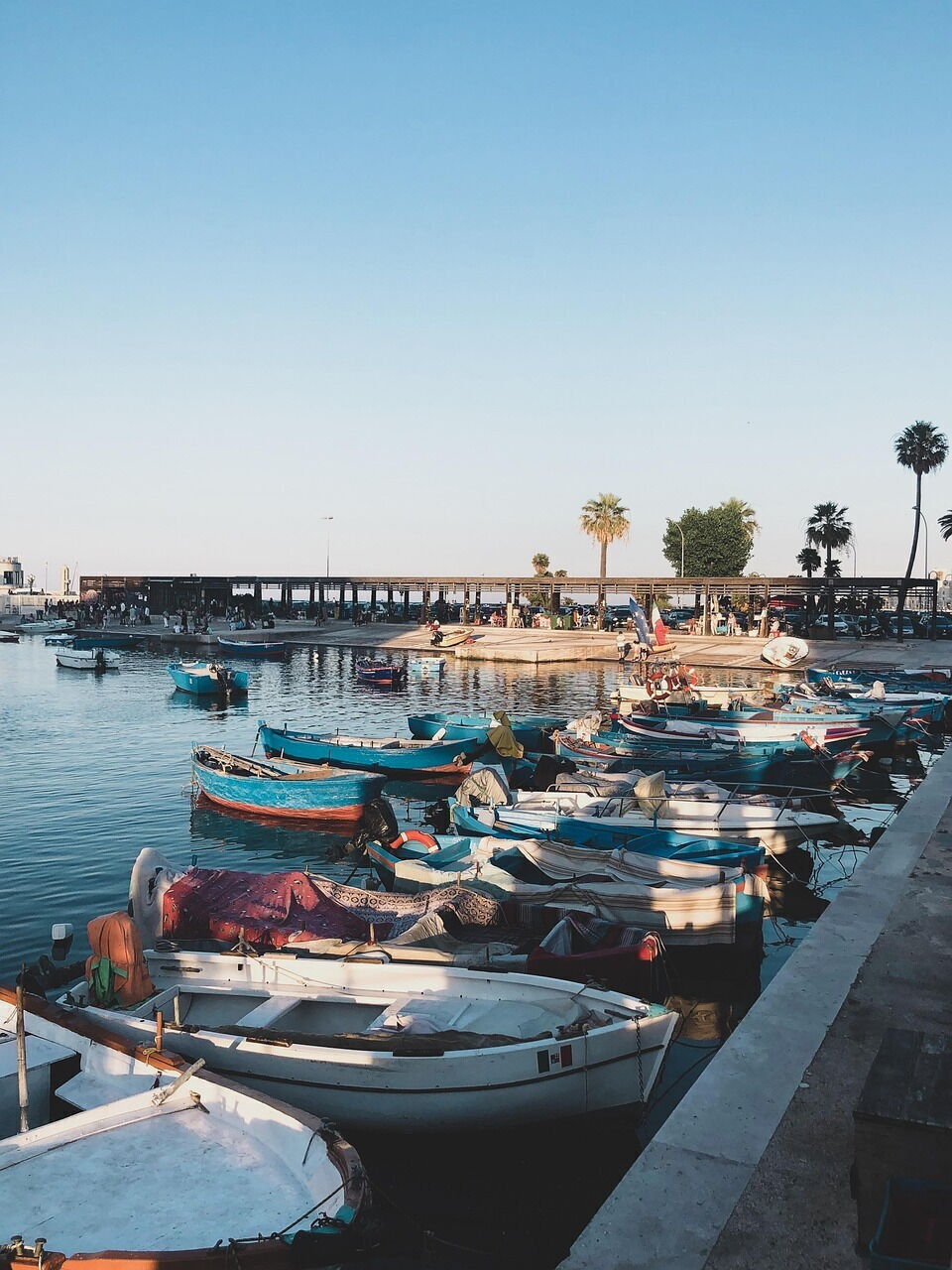
Situated on a promontory that separates the old port from the
modern one, Bari extends from the seafront—the longest in Italy at 12 km—to the
hills of the Barese Murgia, dotted with farmsteads and karst caves.
The Mediterranean climate brings mild winters and hot
summers, ideal for diving into the Adriatic waters.
Activities & Attractions:
- Basilica of Saint Nicholas (11th c.): a Romanesque masterpiece that houses the saint’s relics.
- Swabian Castle: rebuilt by Frederick II after 1156; today it hosts exhibitions and events.
- Lungomare Nazario Sauro: a promenade between sea and city, enlivened by cafés and restaurants.
Other towns to visit:
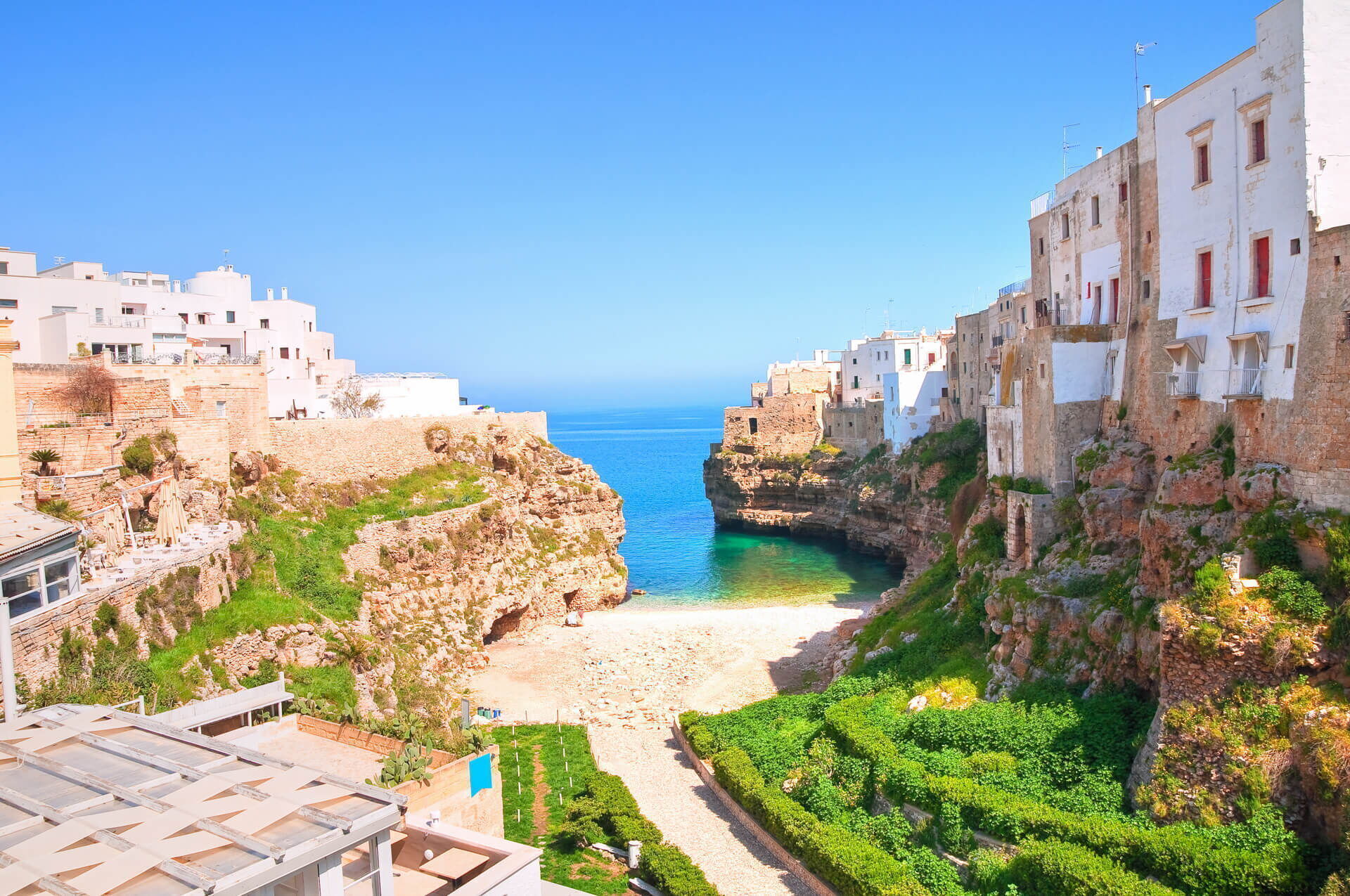
- Polignano a Mare: sea caves and Lama Monachile, a beach set between cliffs.
- Monopoli: Baroque town center and small harbor, with fine sandy beaches.
Brindisi:
Brindisi has been the “Gateway to the East” since Roman times (the Appian Way ended here). It was contested by Byzantines, Normans and Swabians; its Roman Columns marked the terminus of the regina viarum.
Overlooking the Adriatic, it boasts a naturally protected harbor; its coastline alternates between beaches and cliffs, opening onto nature reserves such as Torre Guaceto and the salt pans of Punta della Contessa.
Activities & Attractions:
- Swabian Castle (13th c.): a Frederick II fortress offering panoramic sea views.
- Monument to the Sailor of Italy: a colossal bronze statue and city emblem.
- Provincial Archaeological Museum: Messapian artifacts beneath the Templars’ Portico.
Other towns to visit:
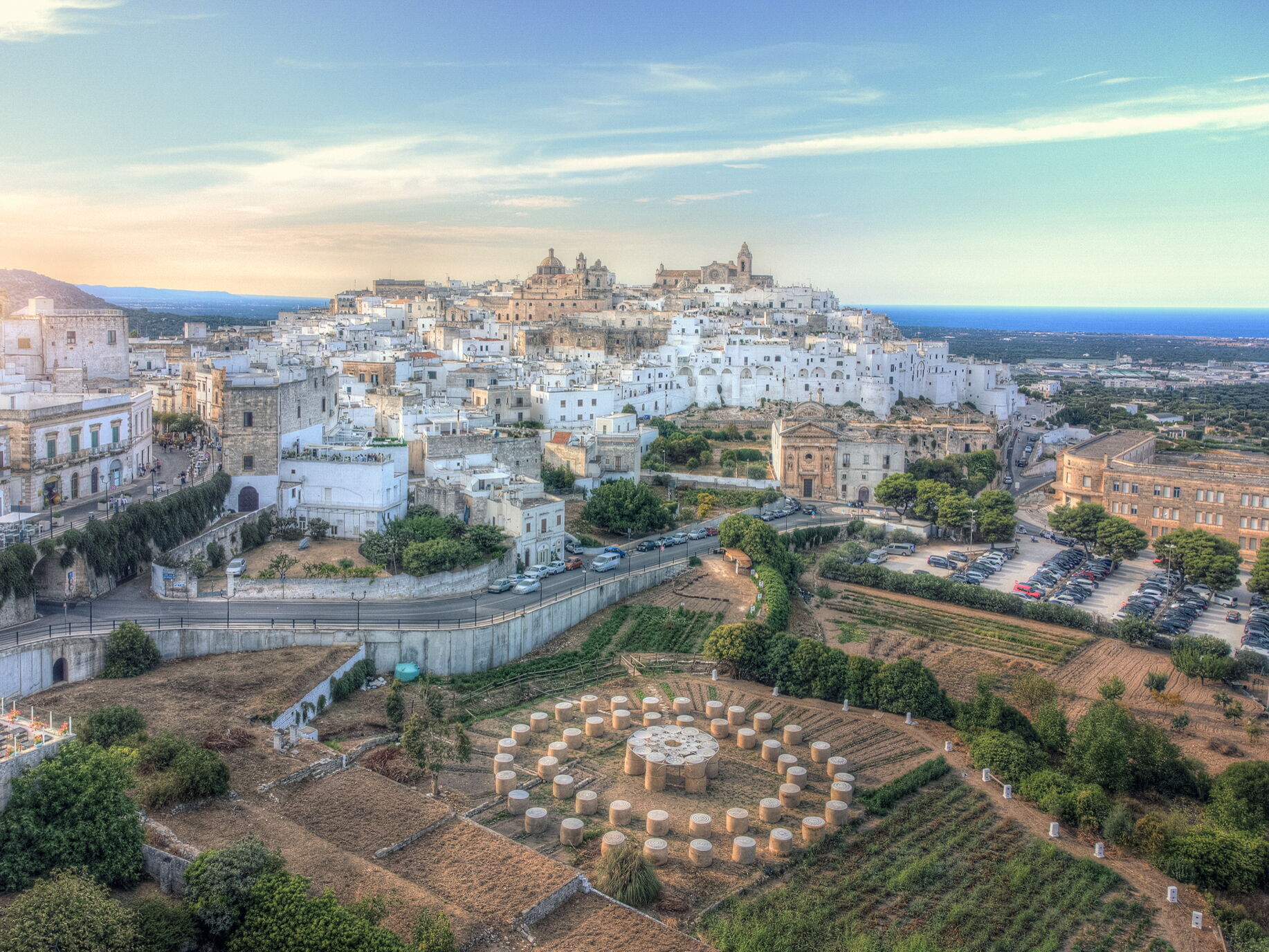
- Ostuni: the “White City” on three hills, with whitewashed walls and a Romanesque cathedral.
- Cisternino: picturesque village and charming historic center, famous for its traditional and authentic local cuisine.
Lecce:
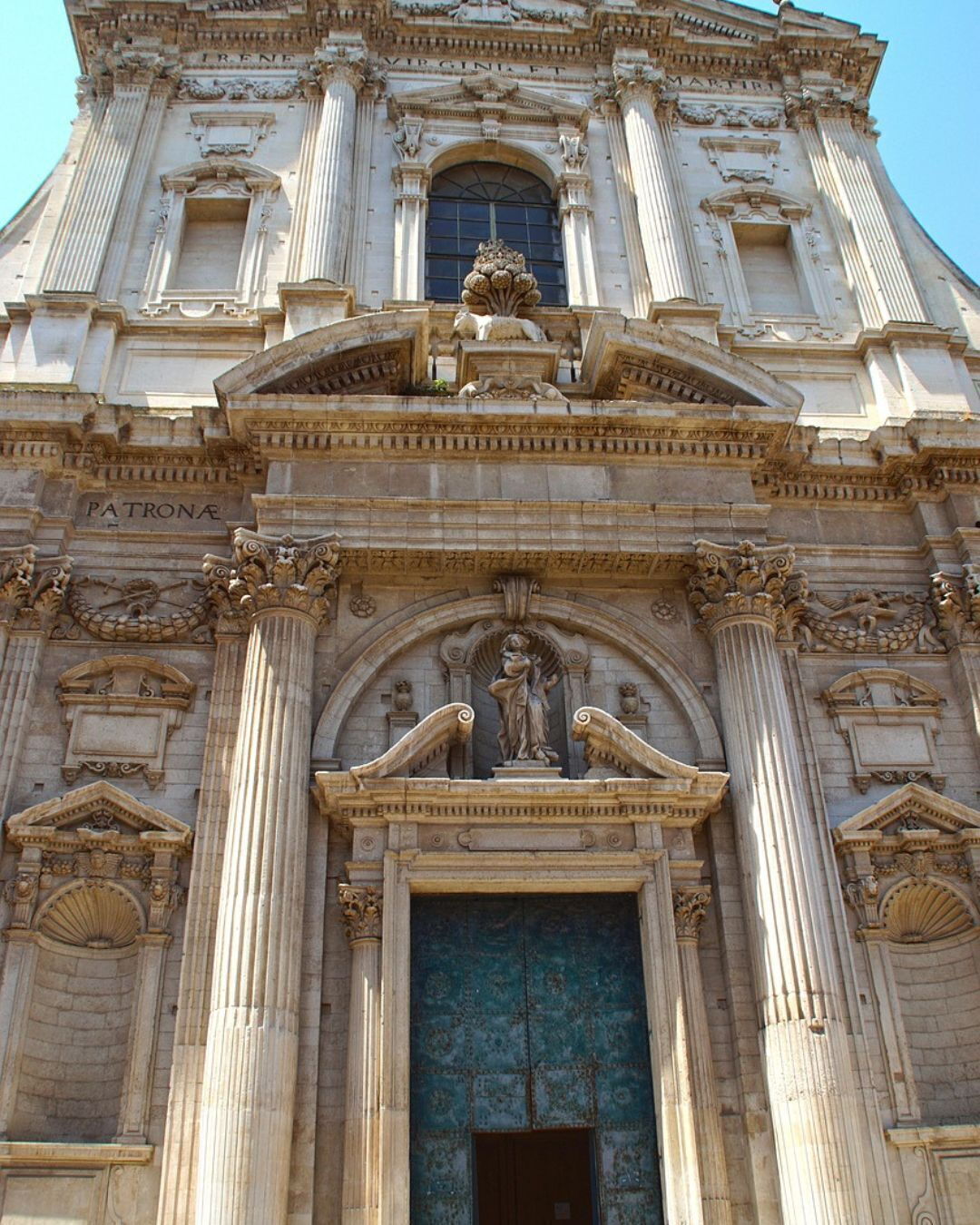
Founded by the Messapians, Lecce became a Roman municipality and, in
the 17th century, flourished under Spanish rule with a Baroque style
unique in the world: local architects sculpted honey‑colored limestone
façades, creating an inimitable decorative language.
Situated in the Salento plain, Lecce is surrounded by centuries‑old
olive groves and wheat fields; a short distance away, rocky coasts
alternate with sandy beaches on the Ionian Sea, such as Torre dell’Orso.
Activities & Attractions:
- Piazza Duomo: a Baroque monumental complex with the 1682 bell tower,
- Roman Amphitheatre: dating from the 2nd c. AD, restored and today the stage for summer events.
Other towns to visit:
- Otranto: cathedral with a 12th c. mosaic and walls overlooking the Adriatic,
- Gallipoli: fortified city, Baia Verde beaches and a lively historic center.
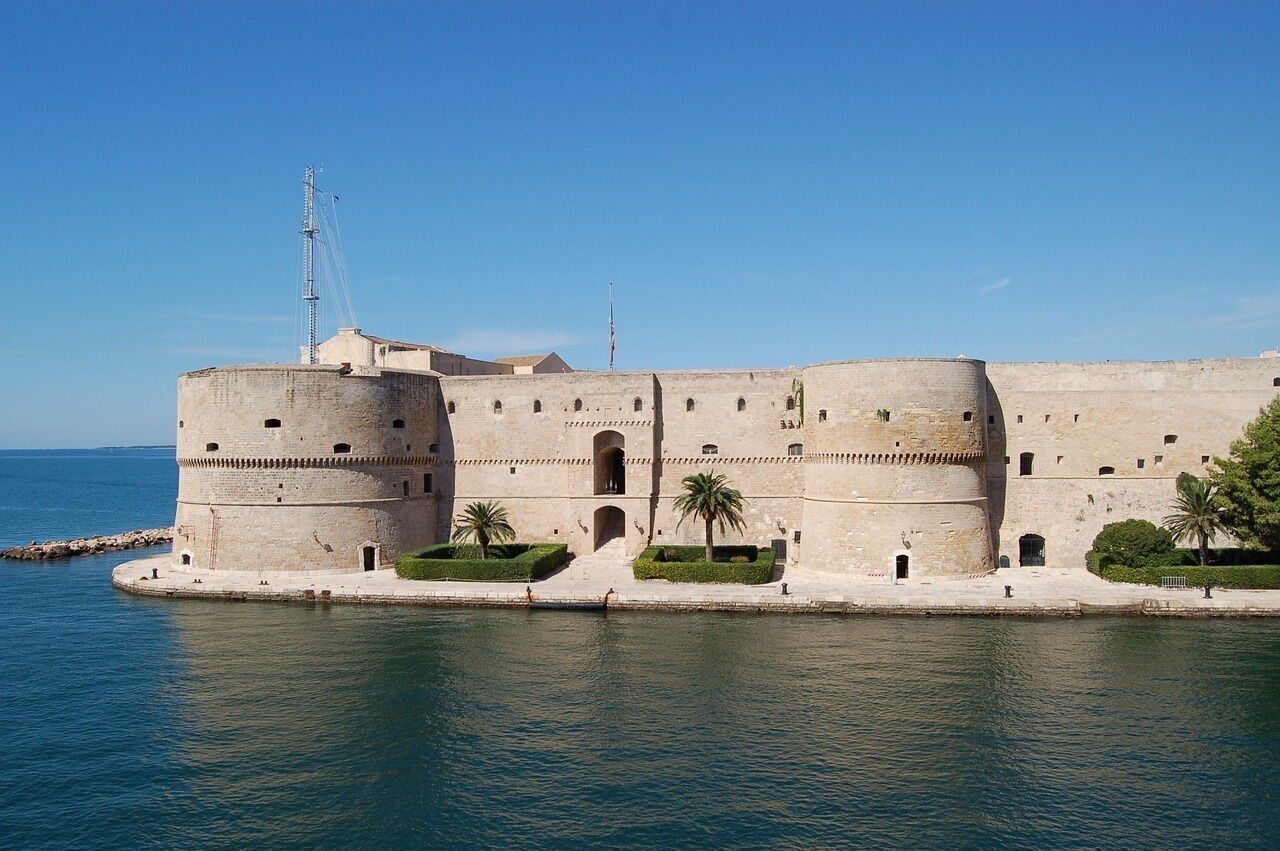
Taranto:
Founded by the Greeks in 706 BC as Taras, it became a Roman
colony and later a Byzantine capital; its “city of two seas” settlement
was contested by Normans, Angevins and Aragonese, who
left as a legacy the Aragonese Castle.
Taranto stands on an isthmus between the Mar Grande
and the Mar Piccolo; the shallow seabed of the Mar Piccolo
hosts mussels and shellfish, while the Mar Grande offers open
navigation channels.
The city unites industrial areas and historic neighbourhoods.
Activities & Attractions: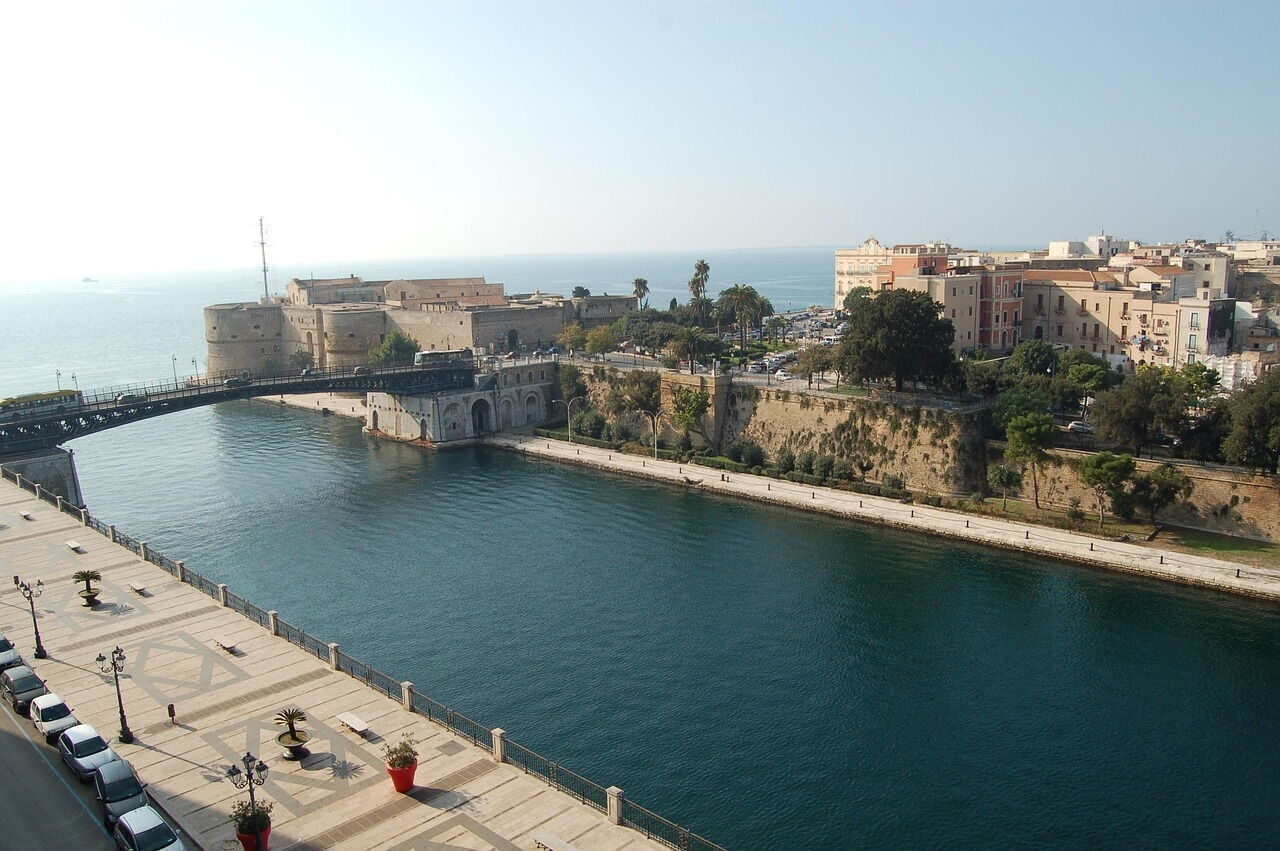
- Aragonese Castle (14th c.): fortress on a small island, today visitable
via underground passages.
- National Archaeological Museum: extraordinary collection of Greek
and Roman artifacts.
- Cathedral of San Cataldo: Romanesque‑Apulian, custodian of
precious sacred works.
Other towns to visit:
- Martina Franca: Baroque jewel in the Itria Valley, renowned for its musical festivals,
- Grottaglie: artistic ceramics and underground trulli workshops, an artisanal experience.
BAT (Barletta‑Andria‑Trani):
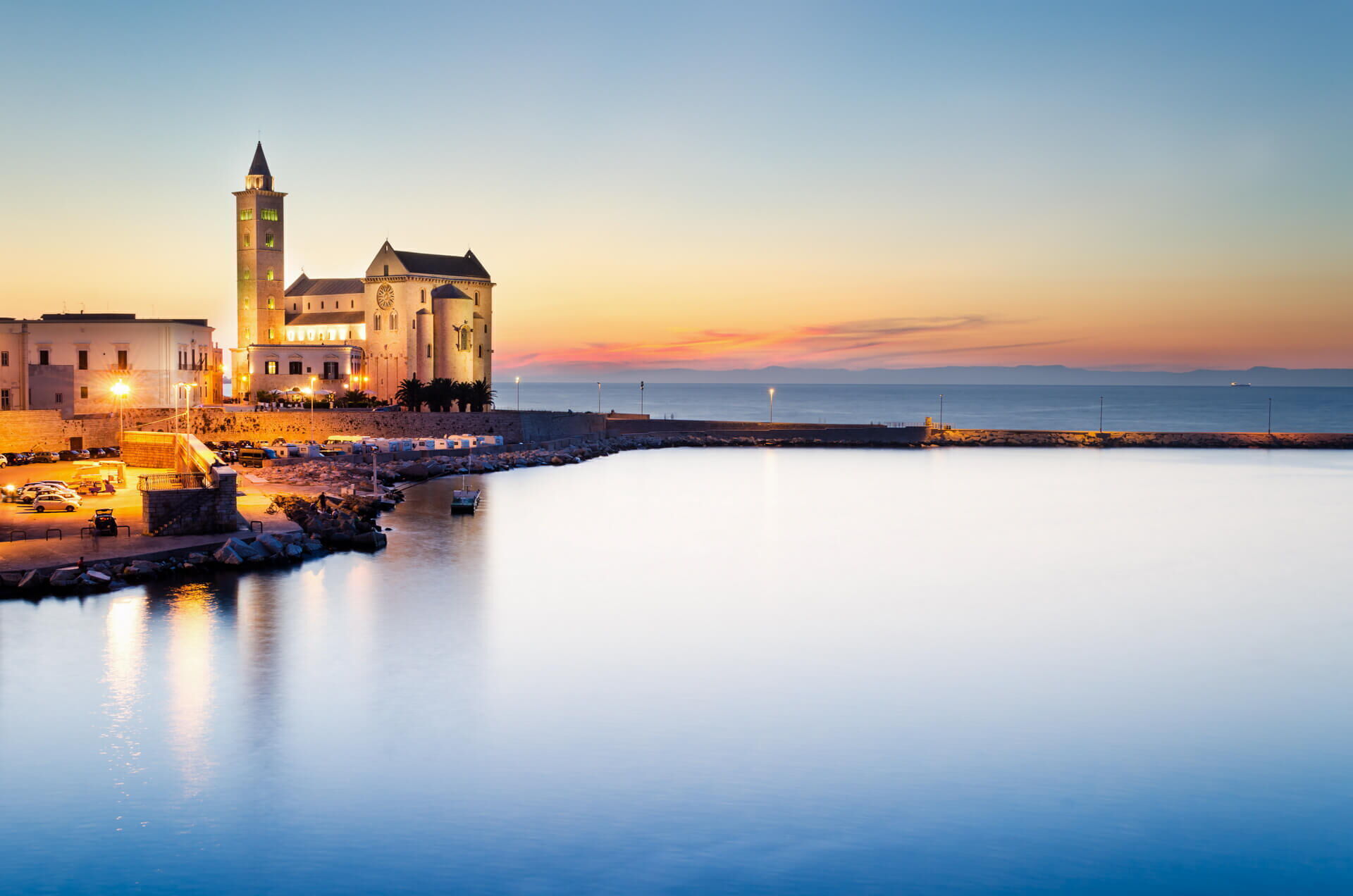 This area, created in 2004, unites ancient settlements: Barletta with the 1503 Disfida, Andria
dominated by the Templars, and Trani, a Byzantine port safeguarding Romanesque jewels.
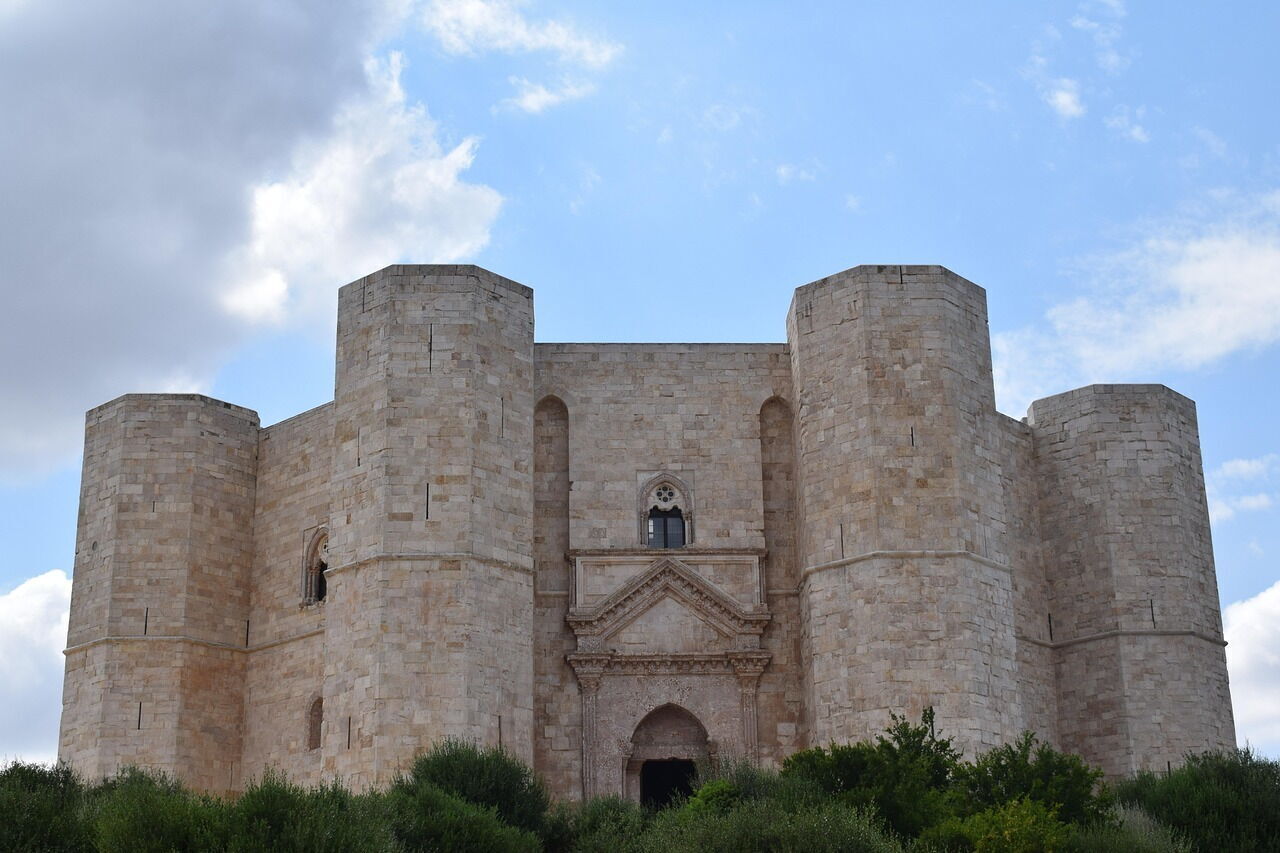
Adriatic coast, hilly hinterland with olive groves and vineyards, and the famed Castel del Monte of
Frederick II, a perfect octagon on a panoramic hill, together form a landscape that changes within a few kilometers.
Activities & Attractions:
- Castel del Monte (1240): UNESCO, an example of Frederickian architecture.
- Cathedral of Trani: Romanesque on the sea, among the most refined in Italy.
- Barletta Castle: site of the Disfida, now a civic museum.
 Other towns to visit:
- Canosa di Puglia: Messapian necropolis and National Archaeological Museum.
- Bisceglie: coastal towers and sandy shoreline, compact historic center.
Foggia:
 Born as a Roman settlement on the Tavoliere, it flourished under the Normans and the
Hohenstaufens; it became a strategic agricultural center for the Kingdom of Naples and a crossroads to the Gargano.
The Tavoliere of Apulia—the largest plain in Italy after the Po Valley—offers fields of
wheat, vegetables, and vineyards; to the north rise the Gargano uplift, with forests and rugged coasts.
Activities & Attractions:
- Cathedral of Foggia: Romanesque-Baroque, frescoed crypt.
- Civic Museum: housed in the Palazzo Dogana, rich in archaeological finds.
Other towns to visit:
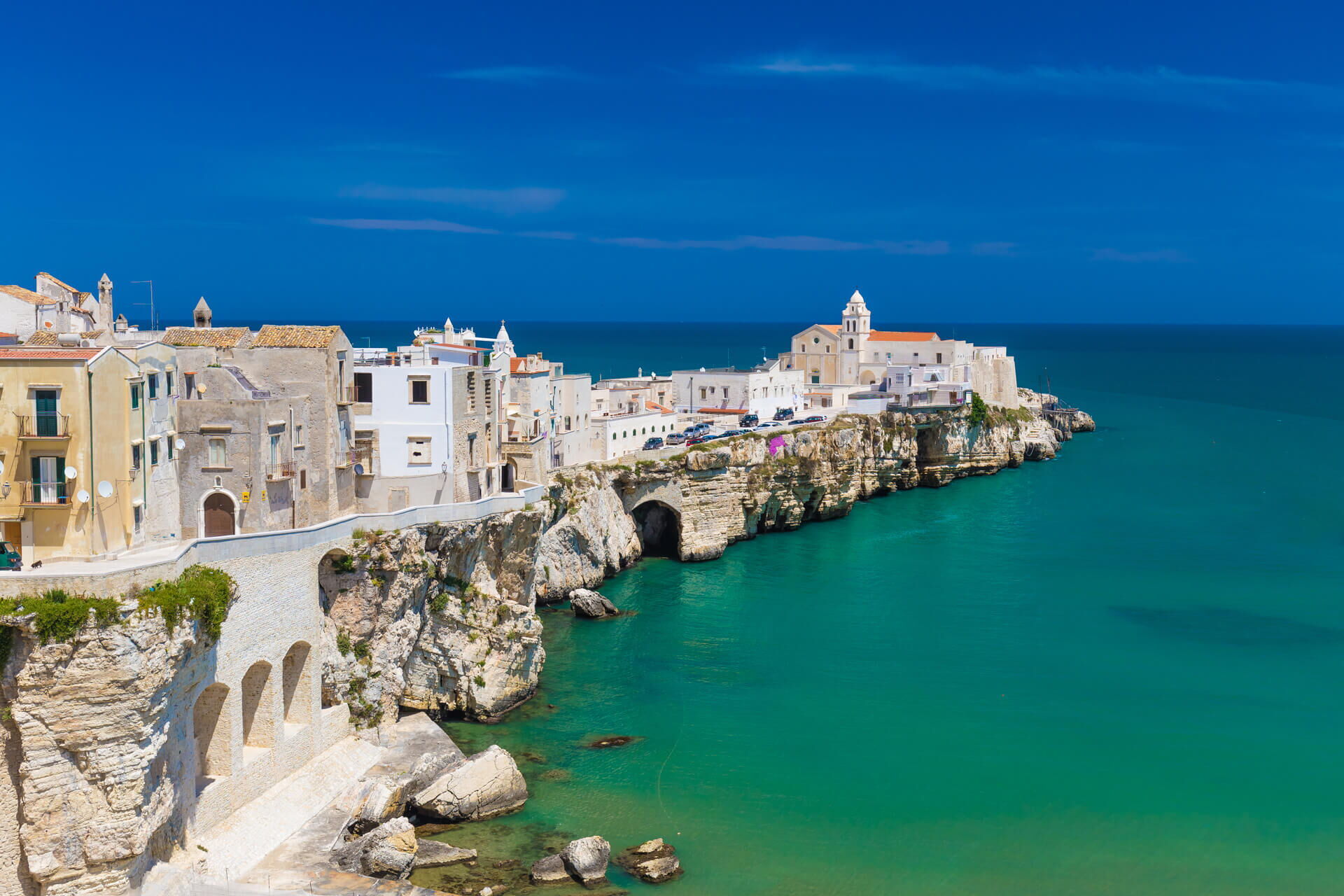
- Vieste: sandy beaches and cliffs overlooking the sea, nearby to the Gargano National Park,
- Tremiti Islands: archipelago of islands, with caves that can be visited by boat and characterized by uncontaminated nature.